What are the 4 Ps of marketing? Best strategies for Your Online Business

What if building a winning marketing plan was as simple as four words?
That is the 4 Ps of marketing, introduced by Jerome Mccarthy in the 1960s, this marketing framework is still relevant. The 4 Ps:
- Product
- Price
- Place
- Promotion
are what help you to decide where to spend your energy: what product or service to sell, how much to charge, where to sell and how to reach your targeted customers.
In 2025, e-commerce sales make up about 16.3% of retail sales in U.S. which means that if you are an online business owner the stakes are higher than ever. Your website, pricing strategy and ad campaigns are how customers can find and see your brand.
This article breaks the 4 Ps down in simple terms. We will walk through how big names in the game like Apple and Amazon’s multi million dollar marketing teams use the 4 Ps and how you can apply the same strategy to your business. Our goal is for you to have a clear and concise playbook to guide your marketing journey.
History & Evolution of the Marketing Mix
Did you know the 4 Ps weren’t the first version of the marketing mix?
In the 1940s, James Culliton described marketers as “mixers of ingredients.” Neil Borden built on this in the 1950s. Then in the 1960s, Jerome McCarthy simplified the idea into the 4 Ps of marketing: product, price, place, and promotion.
At first, marketing was product-focused. The goal was to make something and push it to buyers. Over time, businesses realized that listening to customers mattered more. That shift turned the 4 Ps into a customer-oriented framework.
Later, service industries needed more detail. This expanded the model into 7 Ps, adding people, process, and physical evidence. Other models also emerged, like the 4 Cs (customer, cost, convenience, communication) and the 5 Ps.
Knowing this history matters. It shows that the marketing mix keeps evolving. And as you’ll see, you can adapt these principles to fit your own online business today.
Deep Dive into the 4 Ps

Now onto the practical bit of the article: how to actually use these 4 magic words:
The framework is easy to name: product, price, place, promotion, but you are gonna need some clarity to be able to apply it well.
Each “P” connects to real choices you make daily, from what you sell to how you reach customers. Let’s break them down.
A. Product
Your product is what you’re offering. It can be:
- a physical item
- a digital download
- a service
The key is product-market fit, it’s a little vague so let me make it simple, you need to build and offer something that solves a real tangible problem.
Another less important but no less necessary key is differentiation. Features, design, usability, and brand identity all set you apart. Feedback loops, reviews, and updated versions keep you relevant.
Take Apple for an example. You don’t only think of the iPhone when talking about Apple, do you?
The iPhone is a small part of a bigger ecosystem that includes the App Store, iCloud, and AirPods; building a strong product strategy that will help them build loyalty and keep longevity in the market.
B. Price
Price is what customers give up, not just money but also time and attention. Online businesses use models like cost-based pricing, value-based pricing, dynamic pricing, or even a freemium model.
Psychology plays a role too, $9.99 feels cheaper than $10. Subscription models dominate digital products. Netflix’s tiered pricing works because it matches budgets and preferences. Amazon adds value by bundling services under Prime.
Your pricing strategy isn’t random, it’s a direct lever for conversion rate optimization (CRO).
C. Place
Place is where customers find you. For online business, this means websites, marketplaces, apps, and social media shops. You can sell direct-to-consumer, through third-party platforms, or go omnichannel. Logistics matter, shipping speed and delivery tracking can make or break trust.
Amazon wins here with its Prime delivery system, while Apple blends sleek online stores with premium retail spaces. The right “place” meets customers where they already are.
D. Promotion
Promotion is how you get seen. Online, that means SEO, content, ads, email, and social media. The goal isn’t noise, it’s personalization at scale. Storytelling and branding build trust, while targeting ensures efficiency.
Netflix does this through recommendations and content marketing. Apple creates hype with product launches. Done right, promotion makes sure your product doesn’t just exist, it gets attention.
Measuring Success & KPIs
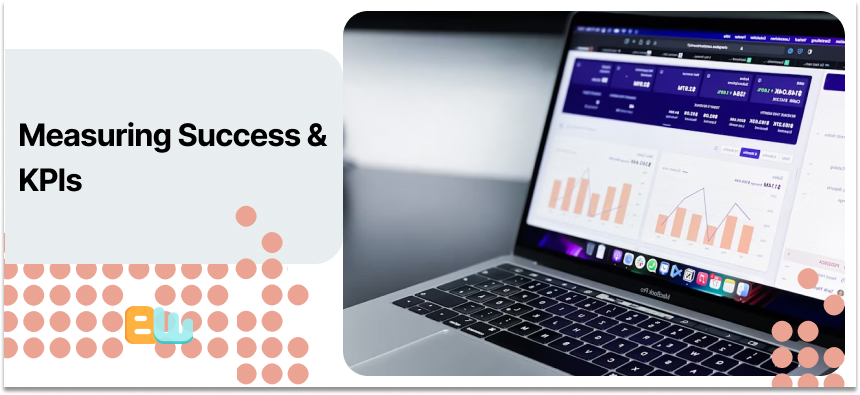
Measuring success is not optional. It tells you what’s working, what’s not, and where to improve. For online business, data drives smarter decisions. Without it, you’re guessing.
Each of the 4 Ps has key metrics to track:
- Product: Look at product returns, customer reviews, and retention rates. High returns or low retention show your product-market fit may need improvement.
- Price: Track profit margins, price elasticity, and subscription churn. Adjust pricing to balance sales volume with profitability.
- Place: Monitor conversion rates, traffic sources, and cart abandonment. This shows which channels drive real sales.
- Promotion: Measure click-through rates, ad spend ROI, and customer acquisition cost (CAC). Knowing which campaigns work helps you optimize your budget.
Tools make tracking easier. Google Analytics shows web traffic and conversions. Shopify or other ecommerce dashboards track orders and revenue. Social media insights reveal engagement and reach.
When you measure consistently, you can make small changes that improve results. Over time, tracking these KPIs helps you refine your marketing mix, boost revenue, and build a more loyal audience.
Implementation Steps for Your Online Business
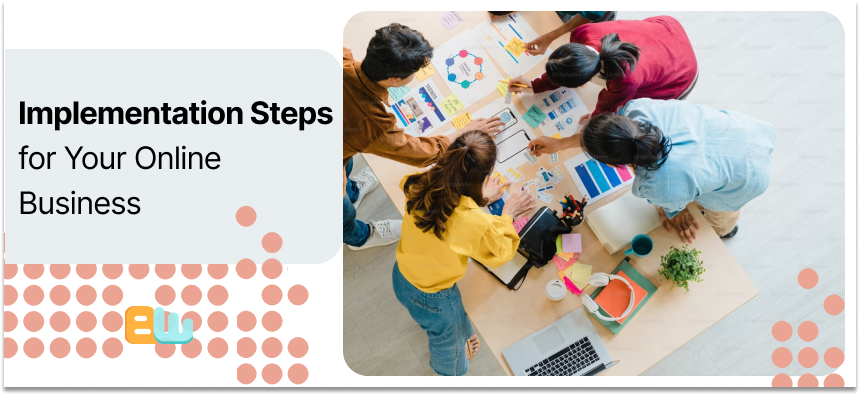
Ready to turn the 4 Ps into action?
Knowing the theory is one thing. But knowing how to apply it to your business is the most important aspect. Here’s a step by step guide to make easy for anyone:
- Research market and audience
Use surveys, social media and competitor analysis to find out:
what they need → what they buy → how they shop
- Define product and Its uniqueness
Think about your product-market fit and focus on:
- features
- design
- customer benefit
- Set pricing strategy
Think of cost, value and psychology of business and then decide what kind of strategy you are going to use:
- tiered subscriptions
- freemium models
- bundles like Amazon Prime
- Choose your channels
Your channel should match where your audience spends most of their time. Omnichannel strategies are usually the best performing ones. Pick one:
- website
- marketplaces
- apps
- social media shops
- Plan your promotion mix
Depending on your budget and reach, use:
- SEO
- content
- social media
- Set metrics and test
Adjust your strategies by tracking:
- conversions
- engagement
- ROI
Big brands like Apple test constantly. Small businesses can too. For example, a handmade jewelry store could start with Instagram ads, email offers, and a Shopify store while tracking sales and clicks to refine strategy.
Following these steps gives beginners a clear path to grow an online business using the 4 Ps.
Common Mistakes to Avoid
Even with a solid understanding of the 4 Ps, many online businesses stumble. One common error is treating each P in isolation. Product, price, place, and promotion work together, ignoring this link can hurt results.
Another trap is ignoring data and feedback. Reviews, conversion rates, and traffic sources give clues about what’s working. Overlooking them risks repeating costly mistakes.
Some businesses overcomplicate their strategy or try to use every channel at once. This spreads resources thin and lowers ROI.
Finally, copying competitors blindly rarely works. Your audience and product are unique. Instead, adapt strategies to fit your own business.
Improve your product market fit and grow your conversion rates by avoiding these mistakes. Learn from these common pitfalls to make smarter decisions and grow more efficiently.
Conclusion
We explored how the 4Ps came to be, the best ways to measure their success and we also offered some practical tips so you could use them to guide your decisions in your online business.
The simple framework of the 4Ps can help you to start small and test often so you could track results and adjust accordingly. The most important pillar is to focus on what works for your target audience.
You will gain clarity by using the 4Ps of marketing. It turns guesswork into strategy. This framework is extremely beginner friendly, if you are ready to take control of your marketing, do not hesitate! Make smarter decisions, improve product-market fit, and grow your online business with confidence using the decades old proven method of the 4Ps.
FAQ
What does the 4 Ps mean in marketing?
Product, Price, Place, and Promotion.
Are the 4 Ps still relevant online?
Yes. They are usable for any type of retail business.
What’s the difference between 4 Ps, 4 Cs, and 7 Ps?
4 Cs focus on the customer first: consumer, communication, cost, and convenience
7 Ps add People, Process, and Physical evidence for services to the established 4Ps.
What are the four Ps of strategy?
They are the same as the 4Ps of marketing, but they align product, price, place and promotion to business goals.What is the most important of the four Ps?
Product market fit is arguably the most important one.
